
A reliable solar tracker system must do more than just follow the sun – it must protect itself when nature strikes. From heavy winds to snowfall, advanced safety features ensure uninterrupted performance and long-term durability.
Protect Your Solar Tracker System with Smart Wind Stow Technology
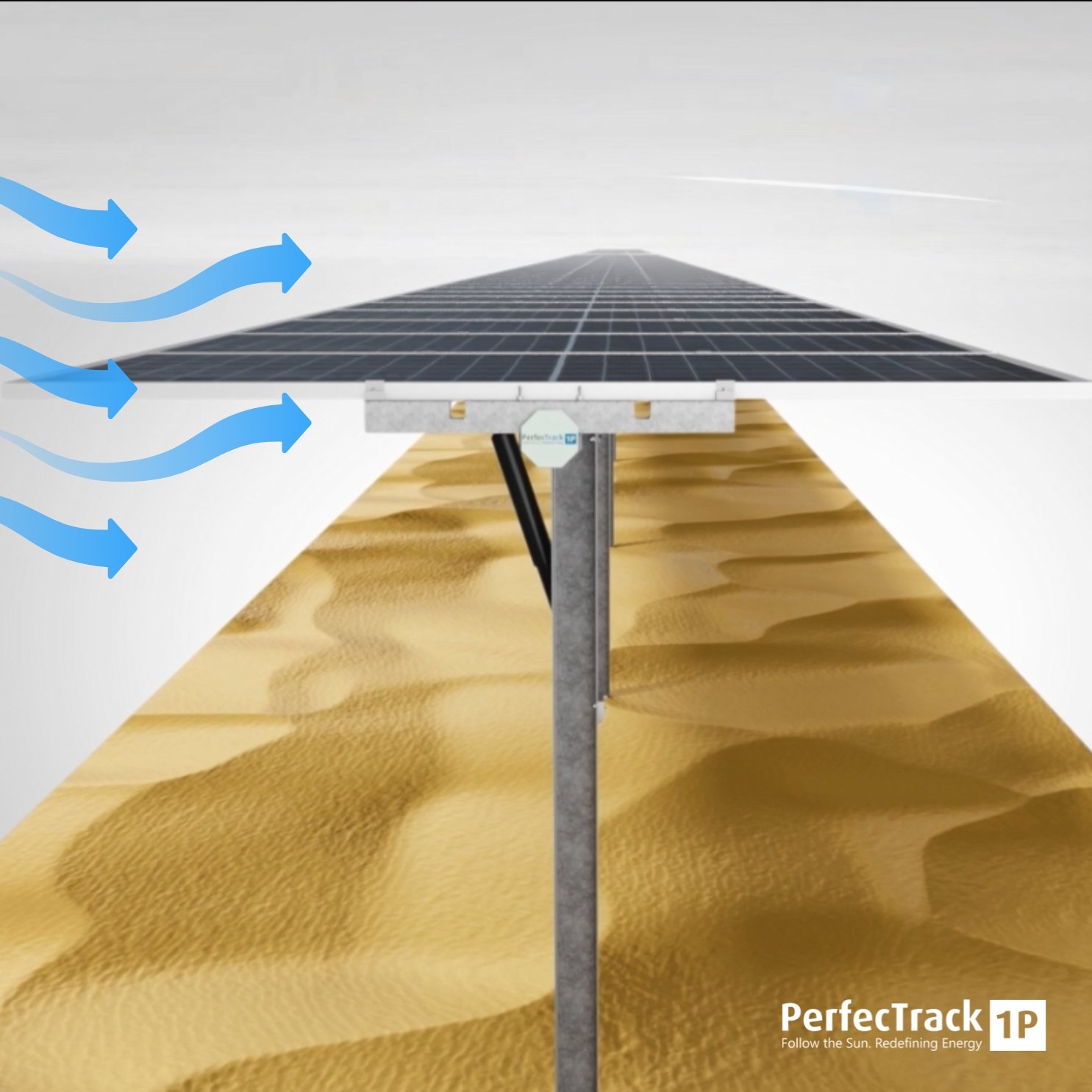
When wind speeds exceed 18 m/s (≈40 mph), the system automatically enters Wind Stow Mode, placing modules at a 0° angle. This reduces wind load, protects the structure, and prevents mechanical stress.
Built-In Specs:
✔ Design wind speed: 120 mph (54 m/s) as per ASCE 7-10
✔ Automatic response via NCU Controller
✔ Operational temperature range: –30°C to +80°C
Optional Snow Mode for Extreme Winter Conditions
In regions with snowfall, the tracker shifts to Snow Mode to remove accumulated snow and maintain energy production. With a tilt of up to 60°, heavy snow can slide off panels, restoring generation efficiency.
Optional Mode Includes:
✔ Snow dump angle up to 60°
✔ Reduced dead weight on panels
✔ Improved uptime in snowy climates
Solar Tracker Systems with Intelligent Backtracking for Higher Energy
During early morning or late afternoon, shadows can reduce energy generation. The system’s smart backtracking technology adjusts panel positions to avoid shading on sloped terrains, improving daily solar capture.
✔ Real-time adjustment
✔ Better land use on uneven ground
✔ Works even in complex terrains
Smart Environmental Response = Long-Term Reliability
By combining Wind Stow Mode, Snow Mode, and Adaptive Backtracking, a modern solar tracker system is not just productive – it’s resilient. These safety features lower maintenance demands, extend the system’s life, and protect investments in challenging climates.
A truly advanced solar tracker doesn’t wait for weather problems – it anticipates and reacts before damage happens, ensuring safer, smarter, and more efficient solar power generation.